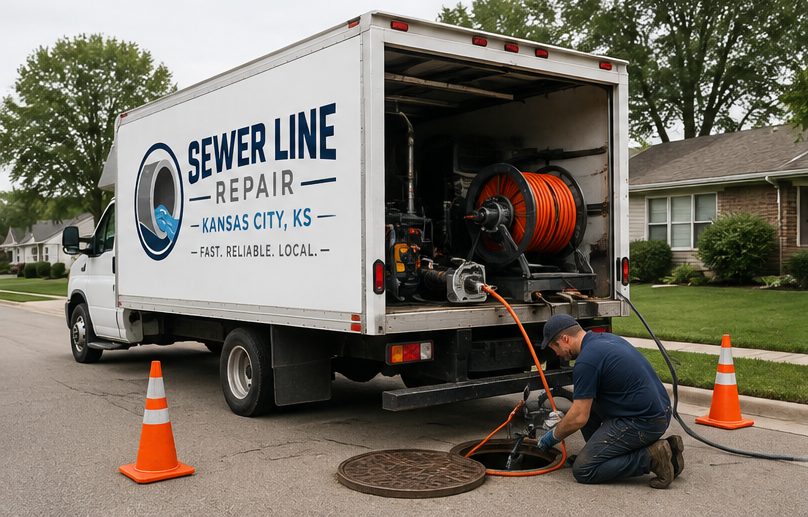
Fix the line, keep the yard
Trenchless Sewer Repair
Find out if your line qualifies for a no-trench repair. Get a Free Estimate
Fix the line, keep the yard
Find out if your line qualifies for a no-trench repair. Get a Free Estimate
A conventional sewer replacement means a trench the full length of the line, often through a driveway, a mature tree's root zone, a patio, or a city sidewalk that you then have to pay to restore. Trenchless sewer repair works through one or two small access pits instead. Cured-in-place pipe lining installs a new resin pipe inside the old one; pipe bursting pulls a new HDPE pipe through the old path while breaking the old pipe outward. Either way, the surface above stays mostly untouched.
Trenchless is not the answer for every line. A full collapse, a severe belly, or a bad offset usually needs a targeted dig at that spot first. But for the cracked, root-damaged, and deteriorated clay and cast-iron laterals that make up most of Kansas City, KS, it is often the least disruptive and most durable option. We camera the line first and tell you honestly whether it is a candidate.
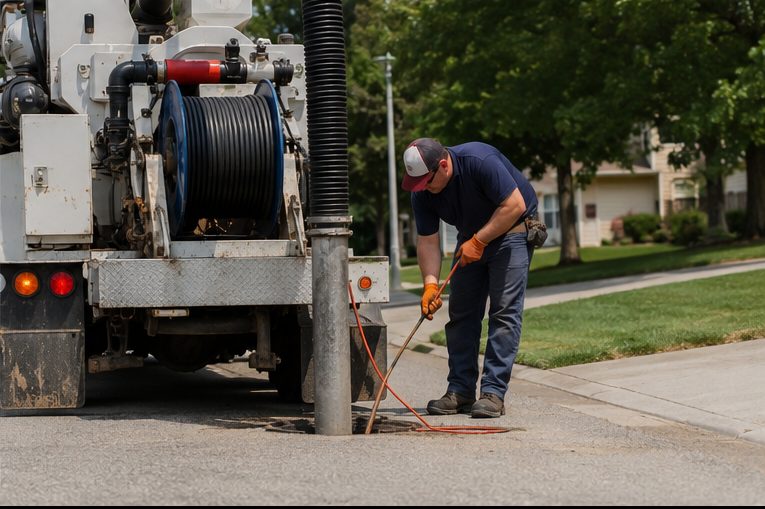
Trenchless methods need enough of the existing pipe path to work through. These are the situations where they usually fit best.
A line with cracks, small holes, or deteriorating walls that still holds its shape is a strong lining candidate.
After roots are cut out, a liner seals every joint and crack at once so they cannot come back in.
Anywhere a trench would destroy something expensive to restore is where trenchless pays for itself.
Kansas City laterals under older streets can run 60 to 100 feet to a deep main. Pulling new pipe through is far less disruptive than trenching the full length.
| Service | Estimated Cost | Average |
|---|---|---|
| Sectional liner, short repair | $3,000–$6,500 | $4,750 |
| Full-length pipe lining | $6,000–$14,000 | $10,000 |
| Pipe bursting replacement | $8,000–$20,000+ | $14,000 |
Planning ranges only. Pipe diameter, length, depth, number of access pits, prep cleaning, and connections change the final cost. Written estimate after inspection.
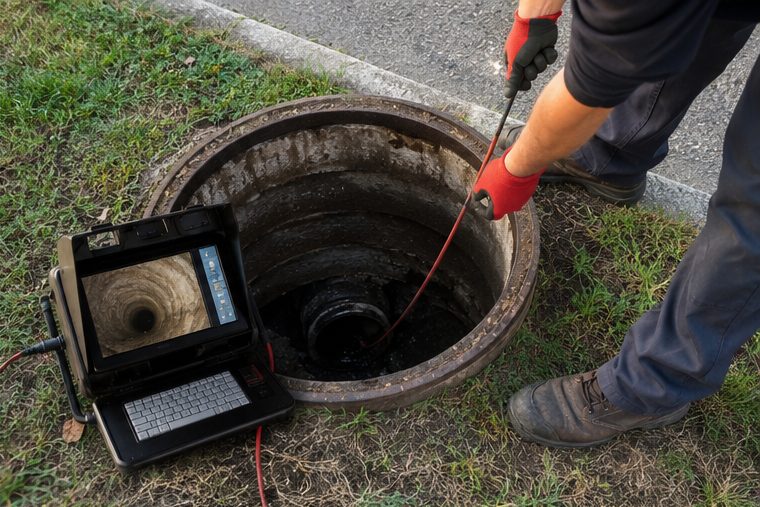
We tell you when a line will not line well. A liner over a collapse or a bad belly is a wasted liner.
No trench means no new driveway, no re-poured sidewalk, and no lost trees. Those savings often make trenchless the cheaper option overall.
We do lining and pipe bursting, so the recommendation is based on your pipe, not on the one tool we happen to own.
Worried about what a sewer repair will do to your yard or driveway? Ask whether trenchless is an option first.
Free — no obligations
We inspect the full line, confirm it is a candidate, and measure length, diameter, and depth.
Roots, scale, and buildup are removed with cutting heads and hydro cleaning so the new pipe seats properly.
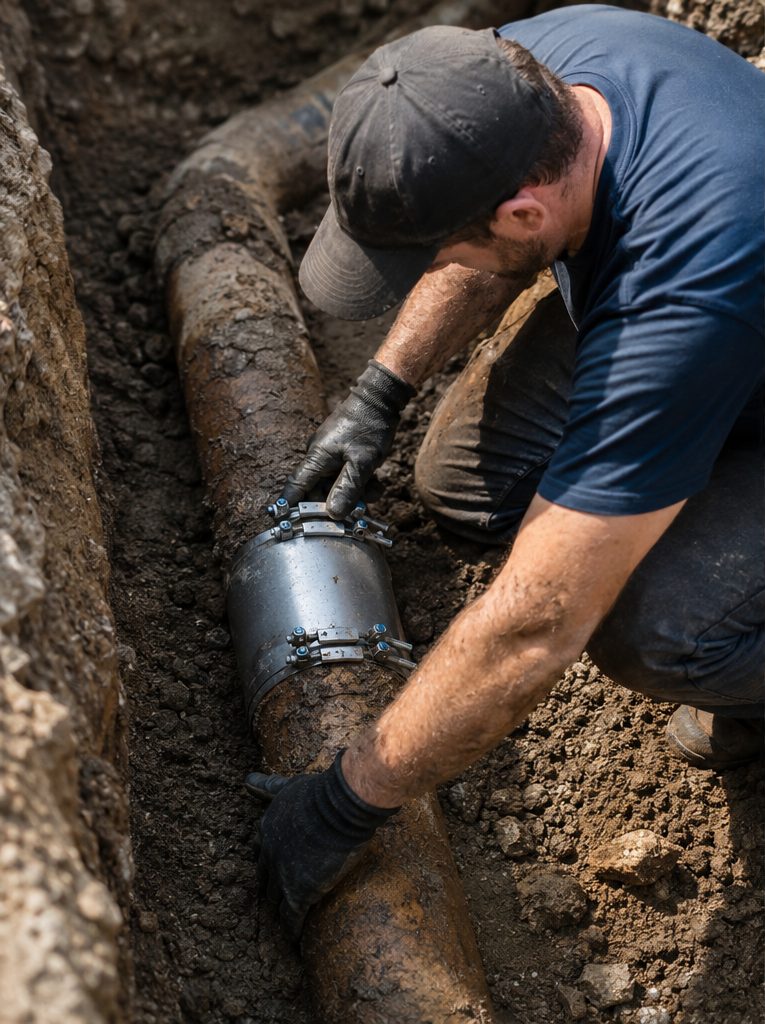
One or two small pits, typically at the cleanout and at the property line or main connection.
The liner is inverted and cured in place, or the new HDPE pipe is pulled through as the old pipe is burst.
Connections are reopened, the line is cameraed end to end, and flow is tested before backfill.